SCTID 49436004Accepted
SCTID 44054006Accepted
SCTID 59621000Accepted
OvoTech reads incoming correspondence, suggests SNOMED CT UK codes with the evidence behind them, and writes approved codes back to EMIS or SystmOne. Nothing reaches the record without a person saying yes.
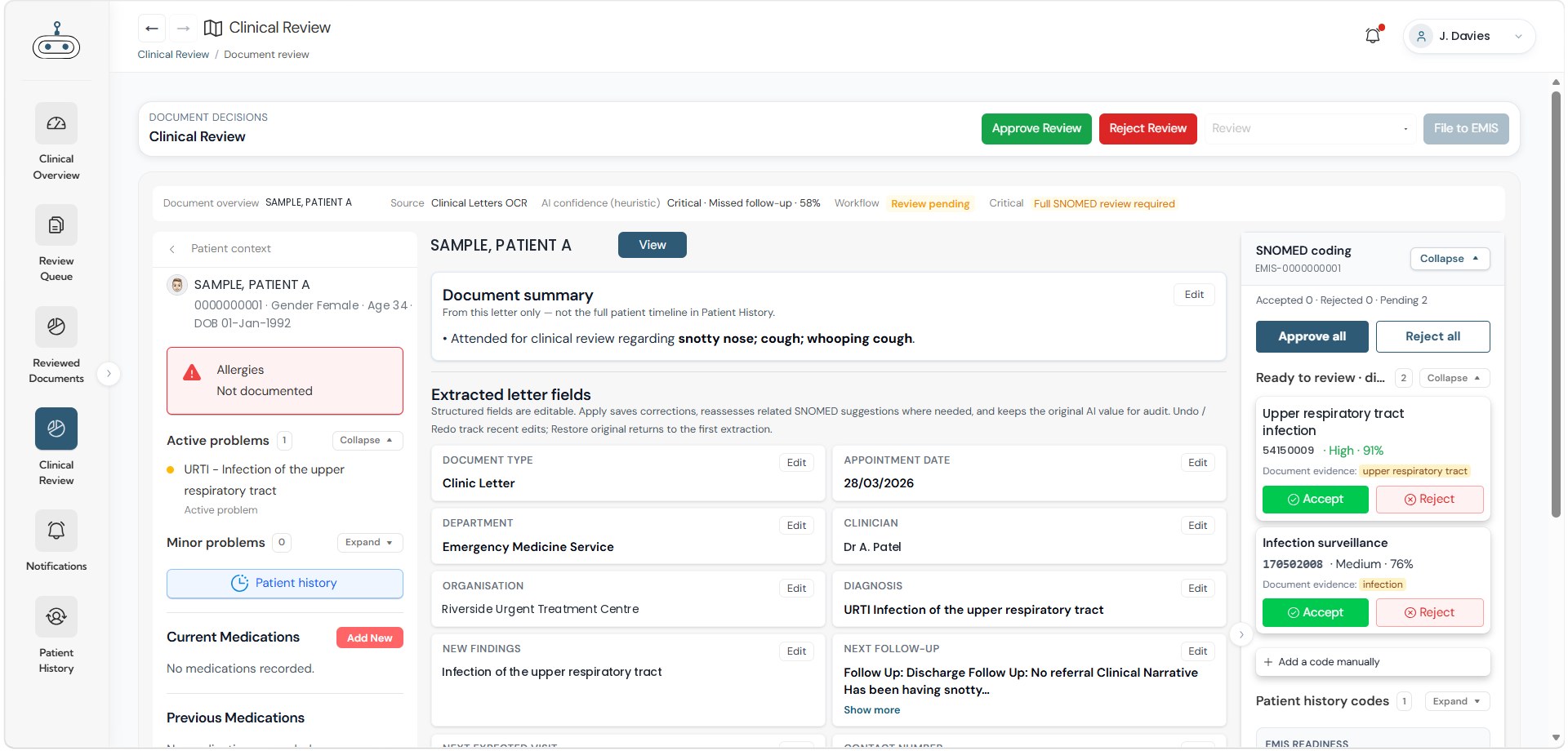
The patient on the left. The letter, summarised and structured, in the middle. SNOMED CT UK suggestions on the right, each tied to the words it came from. Your reviewer sees everything needed to decide, and nothing reaches the record until they do.
Every day your practice receives discharge summaries, specialist letters and clinic notes. Someone has to read each one, pick out the diagnoses, problems and medications, find the right SNOMED code and file it.
Too often that someone is a GP. It's slow, it varies from one person to the next, and it doesn't scale with volume. OvoTech Medical Coding takes the reading, extracting and looking up off your team, and leaves them the decision.
Today a letter passes through four tools and five hand-offs before it reaches the record. With OvoTech it follows one connected path, and the decision still sits with your team.
Staff read the full document by hand.
Findings, problems and medications found manually.
Codes are missed, or chosen inconsistently.
Expensive clinical time spent fixing admin.
Slow, error-prone and impossible to scale.
Ingested and matched to the patient.
By type, sender, specialty and urgency.
SNOMED CT UK codes, each with its source text.
Accept, amend or reject from one screen.
Filed to the record with an immutable audit trail.
Select a step to see what OvoTech does at each stage, from the moment a letter lands to the moment it is filed.
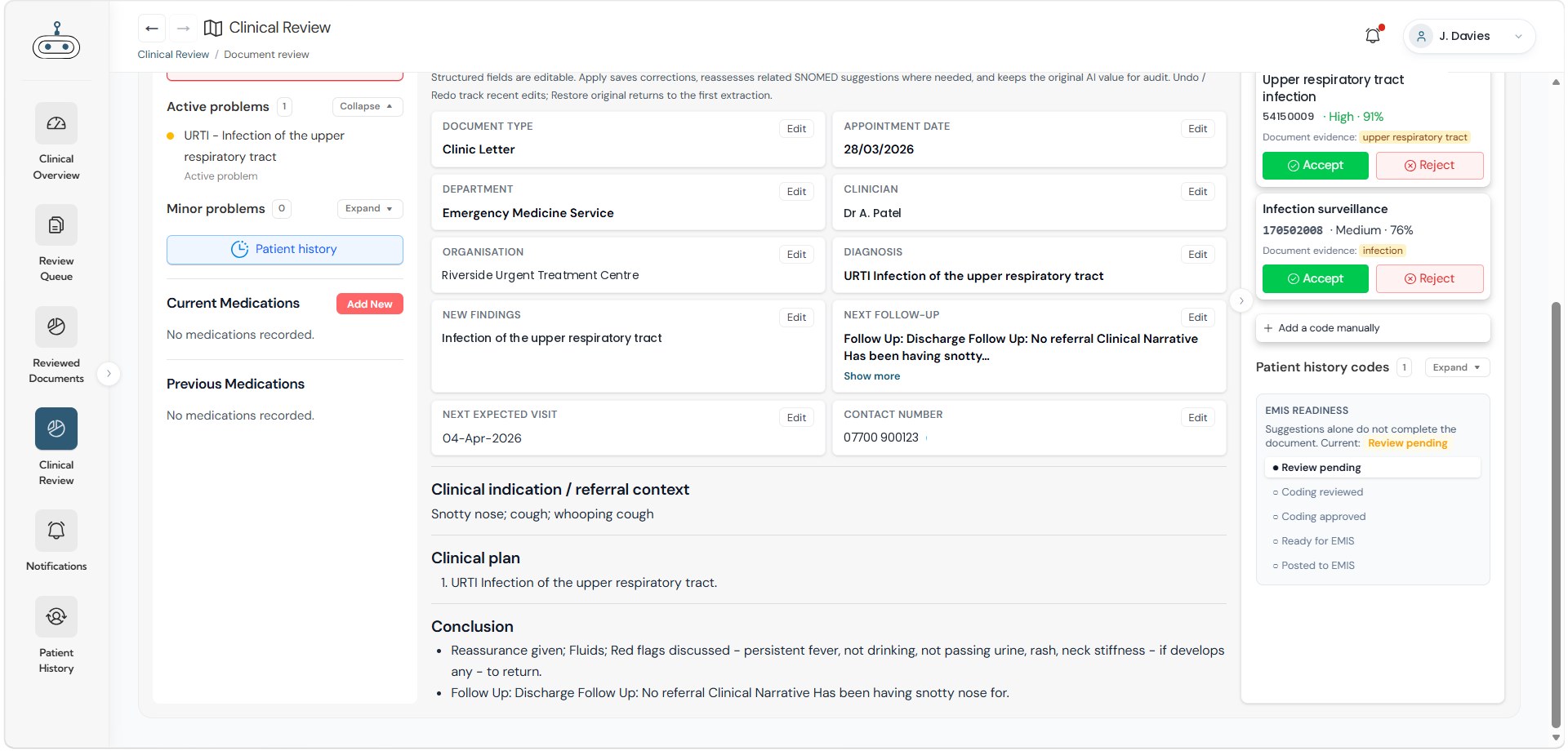
OvoTech pulls the relevant clinical information out of incoming correspondence into structured fields, shown beside the original letter. Reviewers can correct anything, and the record keeps the original value, the change and who made it.
Reviewers see a timeline of the correspondence OvoTech has already processed for the patient, with earlier findings and coding decisions beside the letter in front of them.
Accept, amend or reject each suggestion below. Nothing is filed until every code has been reviewed by a person.
A tour of the screens your team works in every day. All names and numbers here are fictional; no clinical systems are connected.

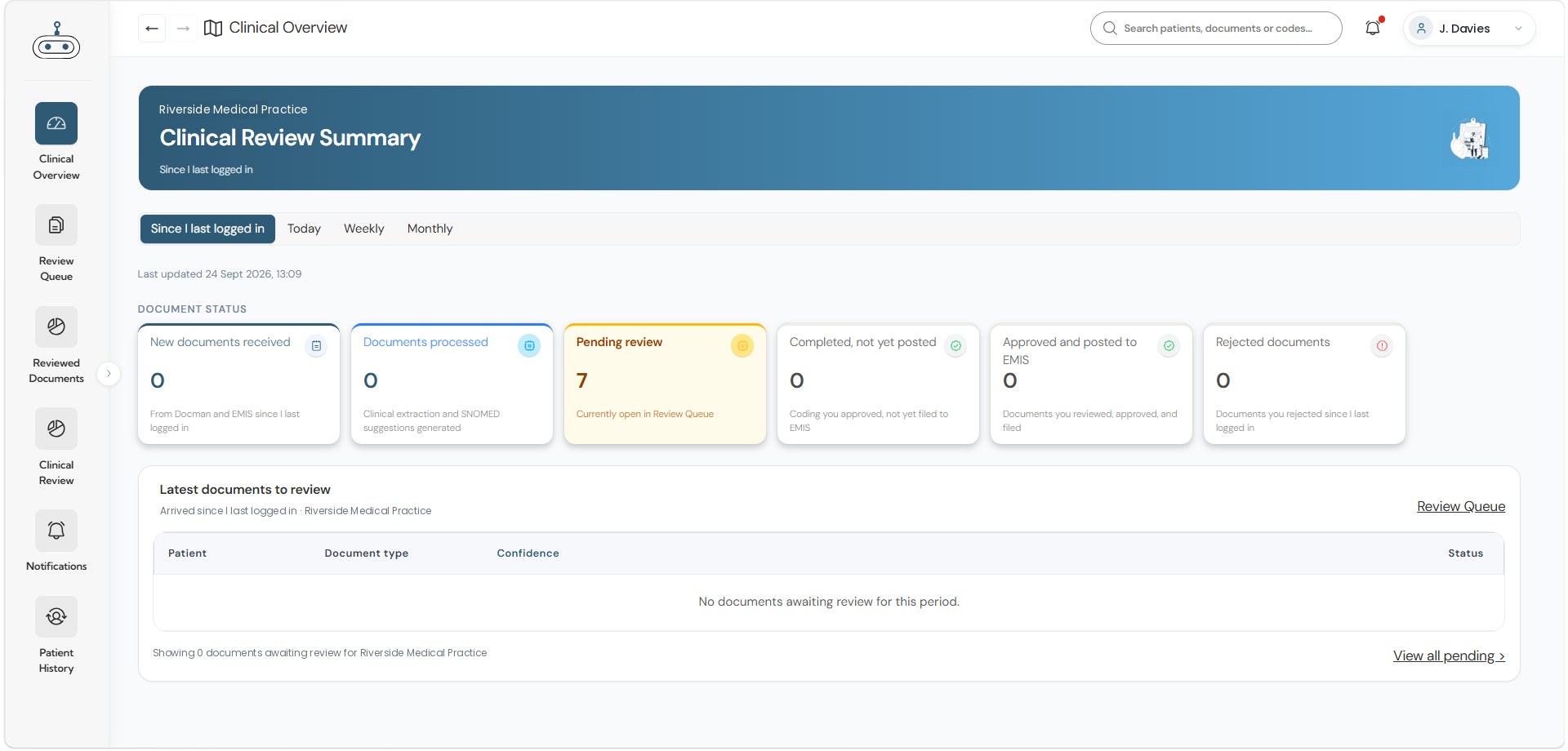
See what has arrived, what has been processed and what is waiting for review, since you last logged in, today, this week or this month.

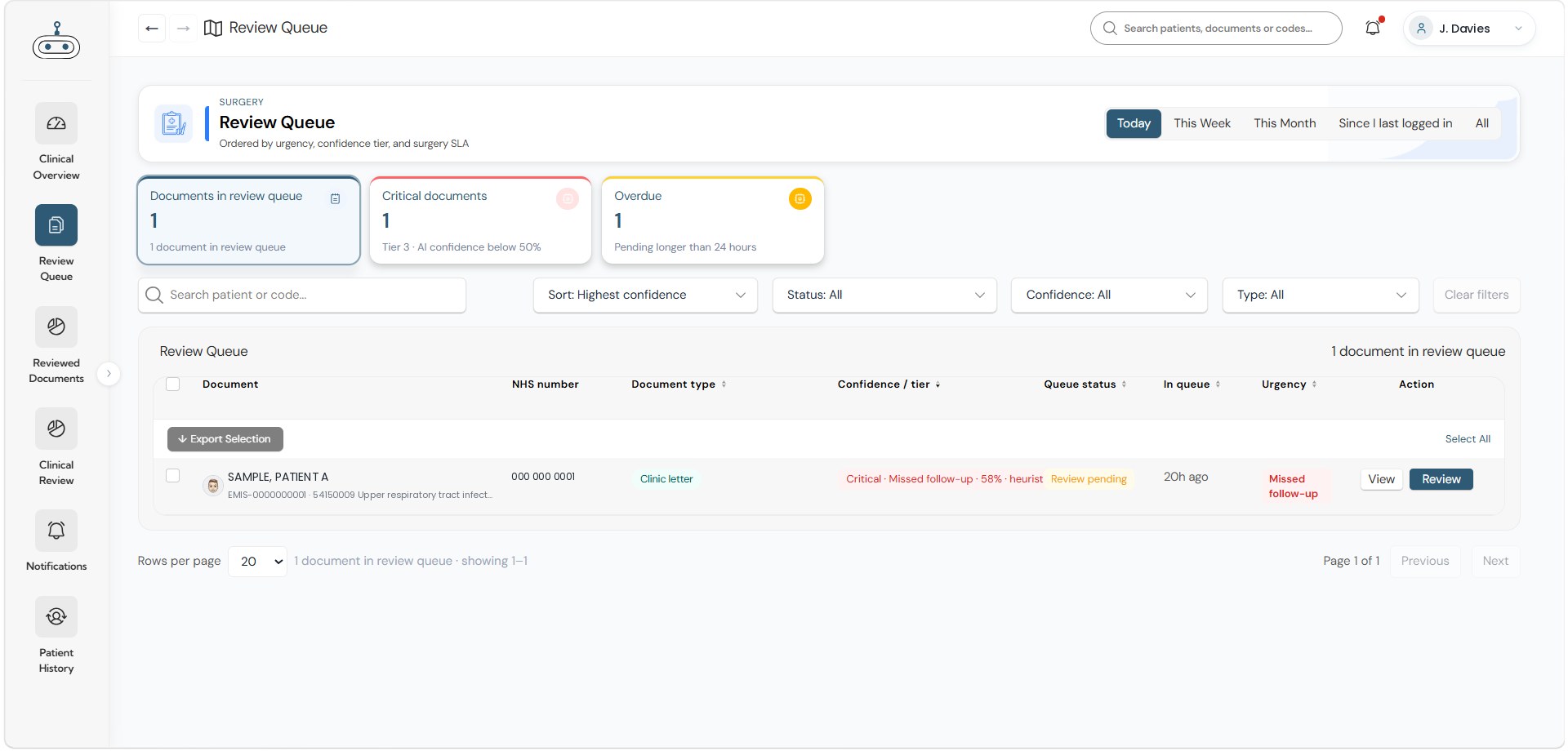
The queue is ordered by urgency, confidence tier and your practice turnaround target, so critical and overdue documents surface first.

Patient context, the document summary, editable extracted fields and SNOMED CT UK suggestions sit on one screen, each suggestion linked to the words it came from.
A timeline of earlier correspondence and coding decisions for the same patient, kept separate from the current document so history never becomes current coding by accident.
Accept all, reject all, or go suggestion by suggestion. Add a code manually when something is missing; everything is counted and logged.
See what has been reviewed, by whom, and whether it has been posted to the clinical system, with the full audit trail one click away.
An authorised reviewer approves the final selection before anything is written to the clinical system. Every step after that is visible, and every action is on the audit trail.

Focused review work for the Medical Coder or Clinical Reviewer. A clear operational view for the practice admin. Each person sees what their role needs.
Move from assigned correspondence to evidence, coding and approval without losing context, with urgent and two-week-wait letters at the top.
See volumes, turnaround and overdue items across the team, and set the rules and targets that fit how your practice works.
Operational visibility does not automatically grant clinical access. Permissions follow each person's role and practice.
Move the sliders to match your practice. The figures are yours; we'll show you what changes when your team reviews instead of codes from scratch.
GP time goes back to patients, and coding quality stops depending on who happened to pick up the letter.
No two practices code the same way. OvoTech adapts to yours, and your practice manager stays in charge of the rules.
Every suggestion carries a calibrated confidence score, and your practice sets the thresholds that decide what happens next.
Missing or uncertain information is flagged, not filled in. Unmatched documents stay visible until someone resolves them.
OvoTech connects through NHS IM1, so it doesn't break when a screen layout changes. Its models are built for clinical language, every output is traceable to source, and the same engine powers every OvoTech module.
See OvoTech Medical Coding on the kind of correspondence your team handles every day.
Request a demo